We're working our way through the Little House books by Laura Ingalls Wilder again this summer! We read them to the older children years ago but I wanted to share them with the younger children. Some of the older ones are sitting in on the reading and enjoying them again. Laura is so wonderfully descriptive. When Mary went blind, Pa told Laura that she would need to be Mary's eyes now so she got in the habit of describing everything going on around them to Mary. I would guess that it is this practice brought on by the tragedy of Mary's loss of sight that makes Laura such a wonderful, descriptive writer! As Ma would say, "There's no great loss without some small gain." Anyway, we are enjoying the books very much. We're presently reading By the Shores of Silver Lake.
Treasured days of discovery and precious moments learning together in our home school in the North woods.
Thursday, July 31, 2014
Reading Laura Ingalls Wilder books
We're working our way through the Little House books by Laura Ingalls Wilder again this summer! We read them to the older children years ago but I wanted to share them with the younger children. Some of the older ones are sitting in on the reading and enjoying them again. Laura is so wonderfully descriptive. When Mary went blind, Pa told Laura that she would need to be Mary's eyes now so she got in the habit of describing everything going on around them to Mary. I would guess that it is this practice brought on by the tragedy of Mary's loss of sight that makes Laura such a wonderful, descriptive writer! As Ma would say, "There's no great loss without some small gain." Anyway, we are enjoying the books very much. We're presently reading By the Shores of Silver Lake.
Wednesday, July 23, 2014
Bug Collections
My friend Delight is the inspiration for our "bug collections" and ours will never look as professional as hers nor will we have as many species to display, but she has inspired me and our children to make our own displays. She tells stories of going out nightly around the yardlight with her first two sons collecting various moths and she has wonderful display cases filled with their collections from those years.
It is fast becoming a tradition for our family to purchase bug nets for a dollar each in different colors for each of the children from the dollar store early in the Spring. I recently purchased new display cases so the children can each make their own collection. Following is a link to the site I ordered from: Wholesale Riker Mounts. Shipping almost doubles the price but they were still the cheapest I found.
Ruthie is adding tiny hand-written labels to her display. In the past we've filled the display cases as a family project but the children are older now and I think it will be valuable for them to fill their own cases, deciding on layout themselves.
Saturday, March 22, 2014
"Janet had no inclination to trouble her own head, or Gibbie's heart, with what men call the plan of salvation. It was enough to her to find that he followed her Master."
This reminded me of a quote by Charlotte Mason from Home Education, "The Essence of Christianity is Loyalty to a Person--Christ, our King. Here is a thought to unseal the fountains of love and loyalty, the treasures of faith and imagination, bound up in the child. The very essence of Christianity is personal loyalty, passionate loyalty to our adorable Chief. We have laid other foundations--regeneration, sacraments, justification, works, faith, te Bible--any of which, however necessary to salvation in its due place and proportion, may become a religion about Christ and without Christ. And now a time of sifting has come upon us, and thoughtful people decline to know anything about our religious systems, they write down all our orthodox beliefs as things not knowable. Perhaps this may be because, in thinking much of our salvation, we have put out of sight our King... Let us save Christianity for our children by bringing them into allegiance to Christ the King. How? How did the old Cavaliers bring up sons and daughters, in passionate loyalty and reverence for not too worthy princes? Their own hearts were full of it; their lips spake it; their acts proclaimed it; their style of clothes, all was one proclamation of the boundless devotion to their king and his cause. That civil war, whatever else it did, or missed doing, left a parable for Christian people. If a Stuart prince could command such measure of loyalty, what shall we say of the Chief amongst ten thousand, the altogether lovely?'"
Sunday, March 9, 2014
Morals Do Not Come By Nature
This article is written as part of the Charlotte Mason Blog Carival. You can see the schedule and subscribe to it here.
Reading School Education ch. 12 this week, several thoughts stood out to me.
One, She asserts that it's not about rules, but rather about principles, that God's law surrounds us and influences us like gravity. It's not an arbitrary, man-made set of rules, but truths and principles based on true reality given by the designer of us and our world Himself for our benefit.
She mentions that we as parents should "discern the signs of the times too; the tendency is to think that a man can only act according to his 'lights,' and, therefore , that it is right for him to do that which is right in his own eyes; in other words, that every man is his own final authority in questions of right and wrong. It is extremely important that parents should keep in view, and counteract if need be, this tendency of the day." It is interesting to me that the moral climate in England in Charlotte Mason's day was so similar to our present one. Our present culture clearly teaches the same idea - that each must decide what is right for himself and not judge another. In our times it is acceptable to think of ourselves, as individuals, as the central focus of life rather than beginning with God as the measure of all things and thinking of ourselves accordingly. Our culture looks through the wrong end of the telescope. She suggests that we as parents must be aware of this kind of teaching and counteract it.
She says here that, "Morals do not come by nature." and "A certain rough-and-ready kind of morality, varying with our conditions, does come by heredity and environment; but that most delicate and beautiful human possessions, an educated conscience, comes only by teaching with authority and adorning by example."
She goes on to explain how beautiful poetry and art, biography and especially Biblical biography and even the memorization of credes all promote morality and help a child form true ideas about what is right and what God expects of us. This is where a Charlotte Mason education shines! These are the exact means this kind of education utilizes and why I love it so much!
I liked her idea about having children collect mottoes daily. It made me think of Laurie Bestvater's wonderful book The Living Page which lists so many of Charlotte Mason's wonderful ideas for commonplace books of various types.
This chapter concludes with the idea that parents need to be clear in their own minds about the "manner of virtues they want their children to develop" and a caution, that children need to know that "being good is not their whole duty to God, although it is much of it; that the relationship of love and personal service, which he owes as a child to his Father, as a subject to his King, is even more than the 'being good' which gives our Almighty Father such pleasure in His children."
Wednesday, January 29, 2014
Good reading - books by Stephen Meader
Saturday, January 11, 2014
Life in Ancient Rome
For World History we've been studying Ancient Rome. Following is our list of books:

Everyday Life in Ancient Rome by F.R.Cowell - This is a bit like an encyclopedia with the following sections: I.The City of Rome, II.Growing Up in Ancient Rome, III.Family Life, IV.Slavery, V.Earning a Living, VI.Leisure Hours, VII.Relgion.
We're moving through this slowly as there is so much to take in and it isn't given in story form. Still, it gives good descriptions.
Roman People by Olivia Coolidge was interesting but a bit advanced in content. She uses nine short stories to present what life was like for different types of people during this time period. There is intrigue and murder and the author seems to like surprise endings. I found the above two books at a used book sale and we have enjoyed them.
I hope to watch Shakespeare's Julius Caesar in the next few weeks and see if it is appropriate for our family. I found several different ones to try and ordered them in from the library.
I also copied Julius Caesar from Plutarch's Lives for Boys and Girls. The Baldwin Project: Plutarch's Lives for Boys and Girls - Julius Caesar. It was longer than I expected - it may take us awhile to read. I think we'll read it before we watch Shakespeare's play. If you are interested in other versions - Here is Ambleside Online's list. Scroll down to what you are looking for and click the link.
We read Beric the Britain by Henty earlier this year. With Henty, the first chapter or two come slowly and then I don't want to put the books down. I like how historical novels give a wonderful feeling of place and culture. We've also started For the Temple, by Henty. This gives the history of this time-period from the perspective of the Jews.
We're also reading The Eagle of the Ninth by Rosemary Sutcliff. She is a wonderful writer. This story has a Roman legionary and a British warrior who has been captured and made into a slave. They become good friends and seek together to find the Eagle Standard that the Roman's father had been carrying when his legion disappeared into the British frontier. This book includes description of a pagan initiation rite for young warriors. It isn't graphic but young readers may find it scary. I reminded our children that Jesus is stronger than these false gods that the British Druids worshipped.

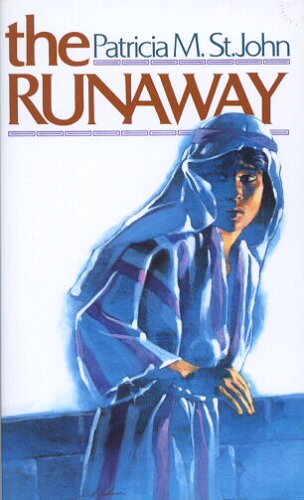
I'm looking forward to reading The Runaway by my favorite children's author, Patricia St. John. It is set in New Testament times.
We started using Simply Charlotte Mason's Matthew Through Acts & Ancient Rome (History, Geography, Bible for Grades 1-12) last year and I want to get back to it. It uses Famous Men of Rome and A Traveller in Rome as well as map activities (I use Uncle Josh's Outline Map book).
My two older students are reading through Augustus Caesar's World.
Some other books they have read are, The Bronze Bow, Stephen a Soldier of the Cross, Detectives in Togas, and Mystery of the Roman Ransom. The oldest has Ben Hur on her list.
I own Galen and the Gateway to Medicine so we'll probably read that, too.
We're starting to have a good sense for this time-period.
Any other recommendations?

Everyday Life in Ancient Rome by F.R.Cowell - This is a bit like an encyclopedia with the following sections: I.The City of Rome, II.Growing Up in Ancient Rome, III.Family Life, IV.Slavery, V.Earning a Living, VI.Leisure Hours, VII.Relgion.
We're moving through this slowly as there is so much to take in and it isn't given in story form. Still, it gives good descriptions.
Roman People by Olivia Coolidge was interesting but a bit advanced in content. She uses nine short stories to present what life was like for different types of people during this time period. There is intrigue and murder and the author seems to like surprise endings. I found the above two books at a used book sale and we have enjoyed them.
I hope to watch Shakespeare's Julius Caesar in the next few weeks and see if it is appropriate for our family. I found several different ones to try and ordered them in from the library.
I also copied Julius Caesar from Plutarch's Lives for Boys and Girls. The Baldwin Project: Plutarch's Lives for Boys and Girls - Julius Caesar. It was longer than I expected - it may take us awhile to read. I think we'll read it before we watch Shakespeare's play. If you are interested in other versions - Here is Ambleside Online's list. Scroll down to what you are looking for and click the link.
We read Beric the Britain by Henty earlier this year. With Henty, the first chapter or two come slowly and then I don't want to put the books down. I like how historical novels give a wonderful feeling of place and culture. We've also started For the Temple, by Henty. This gives the history of this time-period from the perspective of the Jews.
We're also reading The Eagle of the Ninth by Rosemary Sutcliff. She is a wonderful writer. This story has a Roman legionary and a British warrior who has been captured and made into a slave. They become good friends and seek together to find the Eagle Standard that the Roman's father had been carrying when his legion disappeared into the British frontier. This book includes description of a pagan initiation rite for young warriors. It isn't graphic but young readers may find it scary. I reminded our children that Jesus is stronger than these false gods that the British Druids worshipped.
I'm looking forward to reading The Runaway by my favorite children's author, Patricia St. John. It is set in New Testament times.
We started using Simply Charlotte Mason's Matthew Through Acts & Ancient Rome (History, Geography, Bible for Grades 1-12) last year and I want to get back to it. It uses Famous Men of Rome and A Traveller in Rome as well as map activities (I use Uncle Josh's Outline Map book).
My two older students are reading through Augustus Caesar's World.
Some other books they have read are, The Bronze Bow, Stephen a Soldier of the Cross, Detectives in Togas, and Mystery of the Roman Ransom. The oldest has Ben Hur on her list.
I own Galen and the Gateway to Medicine so we'll probably read that, too.
We're starting to have a good sense for this time-period.
Any other recommendations?
Wednesday, June 19, 2013
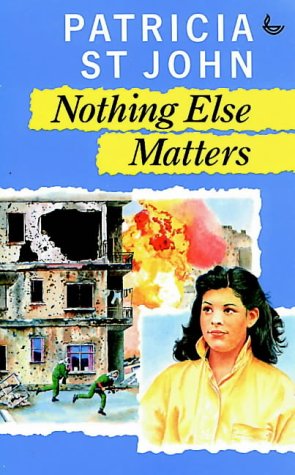
We just finished another marvelous book and I'd like to recommend it!
The following is from the back of the book, "A powerful and moving story based on real events in the bitter conflict in Lebanon, Lamia and her family are caught up in the fighting, with tragic consequences. Lamia struggles with the hatred that threatens to destroy her, until she grasps that forgiveness and love are the most important things. Nothing else matters."
Here are a couple of quotes I recorded in my commonplace book:
"After he died, I think it was like being in hell...Guilt is a terrible thing Lamia. You wake in the night and the stars are no longer beautiful. You walk on the hills and the first flowers are no longer lovely. All the colour goes out of life. It is like a great burden....your heart is always heavy, until you feel that it will crush you."
"'He said there was only one really important question when we have to face death--where is my sin? Am I carrying it myself, as a heavy burden that will separate me from God forever... or have I laid it on Christ on the cross? If so, then death is the gate of life.'"
"'yes, I know...and yet, he never told us that our feelings are what matter. I think he measures our love only by our obedience. It's not how much do I feel, but how far will I obey?'"
...."The idea that loving went along with suffering was somehow resolving itself into a trinity; love, obedience, pain--but productive life-giving pain that sprang into deeper loving, the winter before the spring...."
"She could not explain; only the veil between life and death seemed very thin and death no longer the final tragedy. 'Today...with me.' Here or there, they would come home." ...
"But she could not sleep for a very long time, for the implications of her new discovery if they were true, were almost more than she could take in. For if death was just a step into the presence of God, then her dead were not very far away; they at home in the love of Christ, and Christ, shedding his love abroad in the heart that received him--then they were all closer together than she had dared to imagine, united in that all-enveloping love."
You can get a copy here for as little as $4 including shipping. Or borrow it from Pastor Bob and Doris.
Subscribe to:
Posts (Atom)